Project Summary
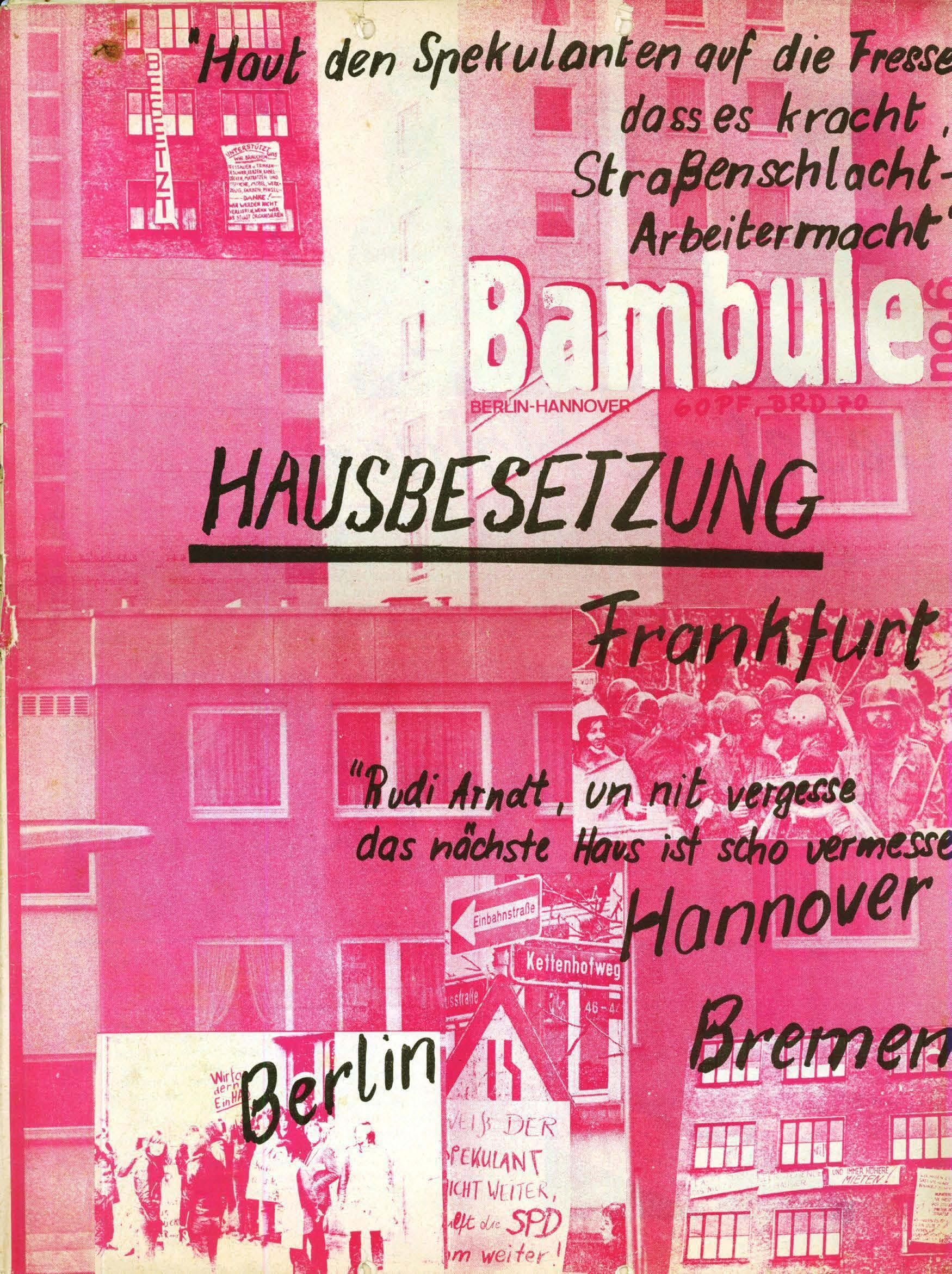
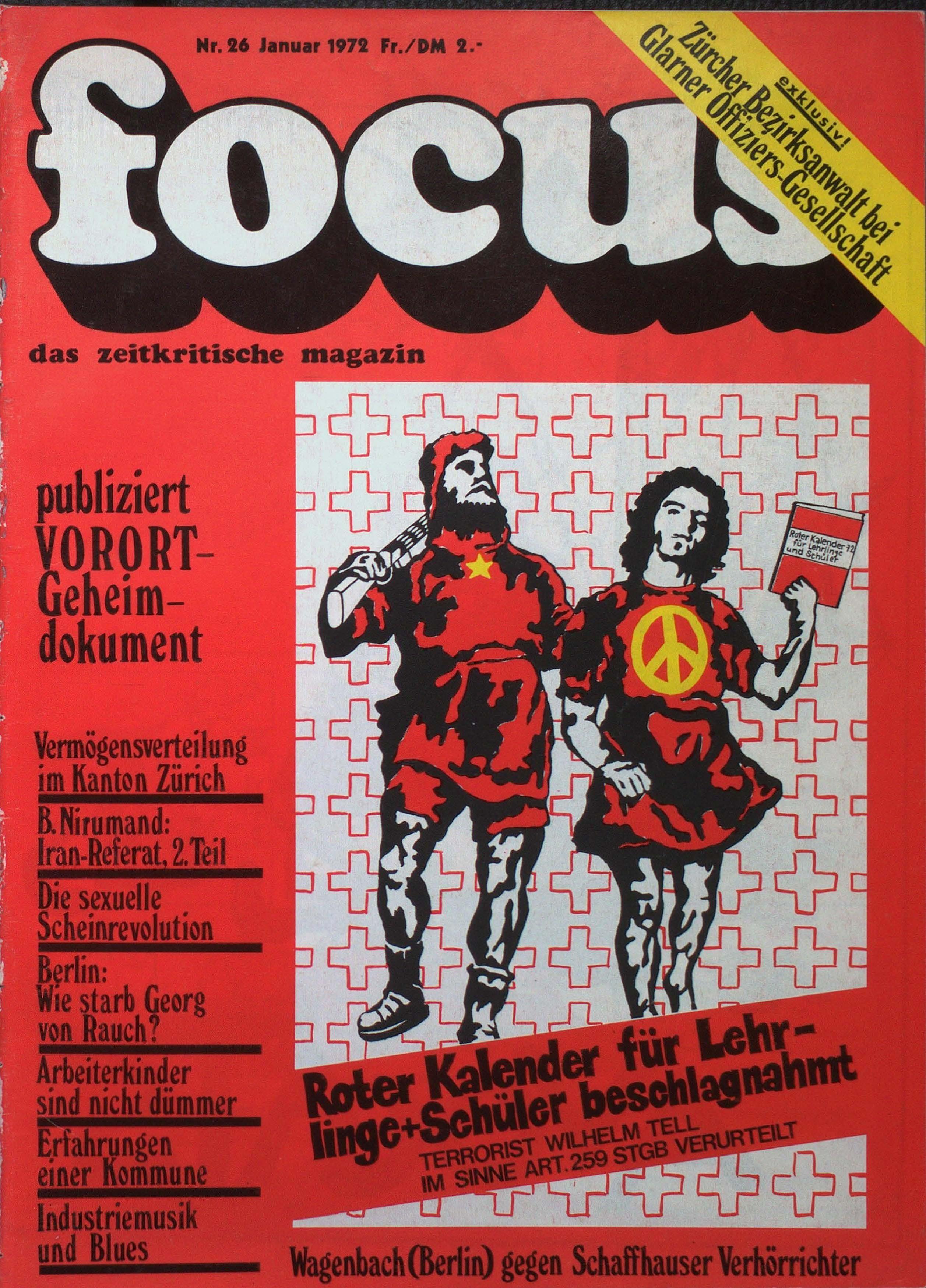
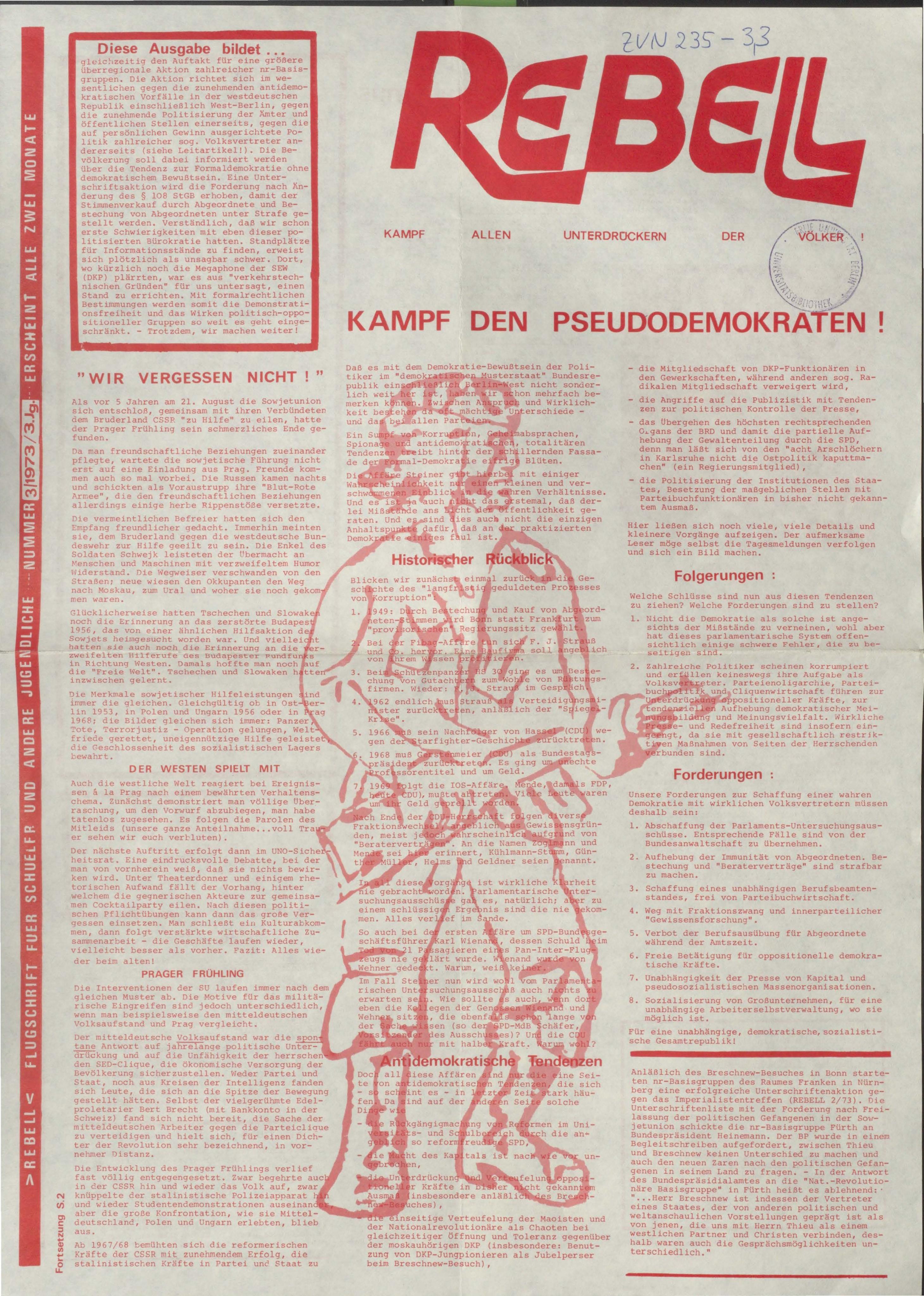
This transdisciplinary research project will investigate new-left and new-right counter media from the 1960s to the 1980s in German-speaking Switzerland and the Federal Republic of Germany by interlocking historical and design-historical perspectives.
The terms “New Left” and “New Right” refer to intellectual and cultural currents and groups which emerged from the 1960s onwards in reaction to the dominant political ideologies of the left and right at the time. In our understanding, the two currents differ in their conception of society and their idea of human beings, particularly when it comes to specific social and political issues. However, this project also assumes that the New Left and the New Right resemble each other in emphasising the cultural purpose of their strategies and goals and by using new forms of communication.
“Counter media” refers to media projects that are characterised by an endeavour to challenge common media practices and representations. In so doing, counter media are believed to produce and disseminate counterknowledge and mould counterpublics.
The project will follow four main objectives: First, it will examine the ideas and representations promoted by the New Left and New Right through the multimodal combination of language and images. Secondly, it will ask how the new-left and new-right counter media seek to produce counterknowledge and create counterpublics by using specific ideas and patterns of thought, techniques and styles. Thirdly, it will scrutinise the functions assumed by the counter media being investigated within the New Left and the New Right, in particular in terms of group identity formation or the mobilisation of followers. Fourthly, it will explore the differences and interconnectedness between the New Left and the New Right by analysing the use of textual and visual content in their respective media.
Empirically, the proposed project will assess printed periodicals including magazines, journals and papers considered counter media and, thereby key organisational tools and prolific communicative platforms of the New Left and the New Right. In order to limit the period of investigation, the project will start with the 1960s, when new types of printed periodicals emerged, and stretch to the late 1980s, when these types of periodicals underwent a number of changes, including professionalisation, centralisation, commercialisation and subsequently a decline in circulation. The project will work with a shared source corpus of periodicals.
The project’s breakthrough character draws from the genuinely transdisciplinary approach adopted in its analysis of both the textual and visual content intertwined in the layout of the periodicals. So far, a historical approach has typically focused on textual analysis or the social and political contextualisation of actors involved in the production of these media. At the same time, design history has mainly been concerned with examining and classifying magazine layout techniques and aesthetics. In addition, research in both disciplines has hitherto concentrated on left-wing examples of counter media. The proposed project thus not only challenges the usual disciplinary divisions but also gives attention to right-wing media.
The proposed research project is of high scholarly relevance: First, it will give insights into the interconnectedness and differences between the New Right and the New Left in German-speaking Switzerland and the Federal Republic of Germany. So far, very little attention has been paid to the prospects and limits of research into these processes of appropriation and exchange in terms of ideas, styles and aesthetics. Secondly, it will provide findings on the role of texts and images in new-left and new-right counter media as well as on their significance in the production of counterknowledge. Since the project will interweave approaches and methods from contemporary and design history while focusing on a shared corpus of periodicals, it will in a substantial way enhance transdisciplinary research and debates.
Against the background of the ongoing intense discussions on the significance of knowledge, information and facts in the media and public sphere, this project will undoubtedly be of broader relevance for society and politics. The research team will thus pay particular attention to the dissemination of the research findings among the scientific community and the general public. Moreover, the expected research results will also be of high interest to educators, policy-makers and practitioners when it comes to training media and communication skills.